Why it Matters
Physical-world decisions are rarely limited by information. They’re limited by fragmented understanding. A useful digital twin gives people and intelligent systems a shared place to reason before expensive decisions become permanent.
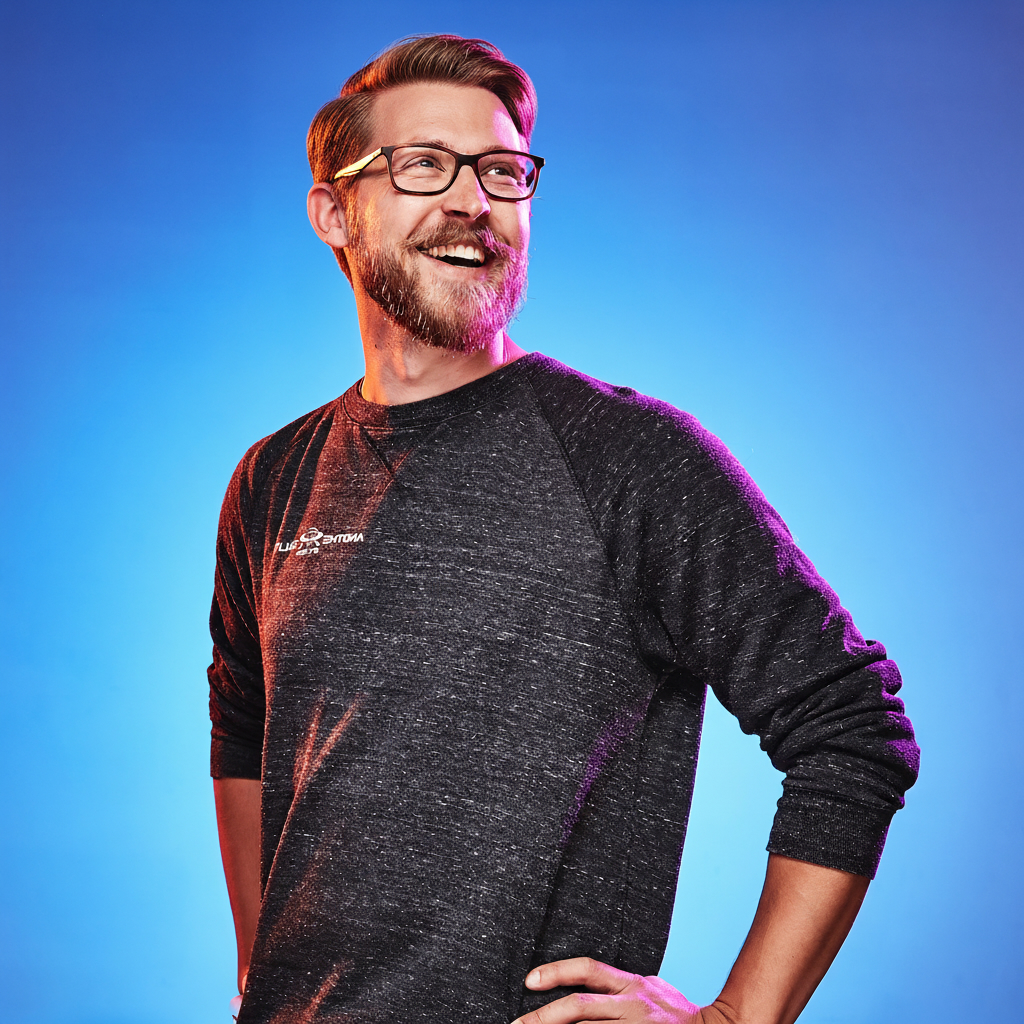 Brad Martin
For the past twelve years, I’ve explored one persistent question: how do new capabilities become so useful they disappear into everyday life?
Every project has been an experiment in finding where new technology can actually make things better by removing friction, simplifying what’s unnecessarily difficult, or creating an experience that wasn’t possible before.
Across healthcare, construction, robotics, entertainment, and the built world, I’ve been searching for the moments where complexity quietly disappears and people are free to spend more time creating, exploring, connecting, and living.
Technology is successful when it feels like magic and people begin noticing what it gives back to their lives.
The industries have changed. The question never has.
“Any sufficiently advanced technology is indistinguishable from magic.”
-Clarke
I’m most interested in technologies when they encounter problems that still feel unresolved. Each exploration begins with a question about how something could work better. A new capability gives us a way to test it.
The projects become evidence: real people, real constraints, and outcomes that either strengthen the idea, change it, or end it.
“What are the most important problems in your field, and why aren’t you working on them?”
-Hamming
Digital twins as shared environments for understanding and improving the physical world.
Physical-world decisions are rarely limited by information. They’re limited by fragmented understanding. A useful digital twin gives people and intelligent systems a shared place to reason before expensive decisions become permanent.
Many digital twins stop at visualization. They look impressive, but people rarely return because the model does not simplify a decision, remove friction, or change behavior.
Across Universal Studios, Looking Glass, MiTek, WWT, and other enterprise work, I’ve explored digital twins for simulation, construction coordination, operational planning, AI workflows, and shared decision-making.
Digital twins are becoming computational environments where simulation, AI, robotics, operational data, and human expertise can meet.
A digital twin should not become another application people have to manage. It should quietly make the physical world easier to understand and improve.
What happens when a digital twin begins reasoning alongside us instead of simply representing what already exists?
This is my current thinking based on the evidence I’ve seen so far. I expect parts of it to be wrong, and I’ll update these notes as I learn.
“The only way of discovering the limits of the possible is to venture a little way past them into the impossible.”
-Clarke
Some friction in everyday life exists only because the tools around it were designed for an earlier world.
New capabilities give us permission to question those assumptions.
These are not predictions or products. They are questions I keep returning to and places where technology may remove an old constraint, create a new possibility, or make the physical world work better for the people living in it.
I’m interested in what should work differently and what could exist next. I’ve worked where new technologies meet the physical world: buildings, places, machines, and the experiences that happen around them. I’m drawn to problems where the old way no longer makes sense, and to possibilities that didn’t exist until recently.
“The best way to predict the future is to invent it.”
-Kay
Sometimes that means removing friction from systems and workflows people have learned to live with.
Other times it means combining emerging technologies to create entirely new ways to understand, build, operate, learn, or experience the world around us.
The technologies keep changing. That’s part of what makes the work interesting. AI, simulation, robotics, spatial computing, and digital twins each reveal different possibilities; together, they can change what we assume is possible.
I keep working in that space: questioning inherited constraints, experimenting with what comes next, and turning new capabilities into things that genuinely improve how people live, work, create, and experience the physical world.
Another Reality Studio started twelve years ago with a simple curiosity: what happens when emerging technologies leave the demo and meet real problems? That question took me into places I never expected, to construction sites, hospitals, factories, stadiums, theme parks, classrooms, and complex infrastructure. The industries changed and so did the technology. What started with visualization and immersive computing grew into simulation, digital twins, synthetic data, AI, and robotics. Looking Glass grew from what those experiments kept revealing: the physical world is full of valuable information, but understanding it is still unnecessarily difficult. Models, systems, sensors, people, and decisions remain disconnected when they increasingly don’t have to be. I didn’t set out to work across so many technologies or industries. I kept following the same question into wherever it led next.
I am most interested in the space before the answer is obvious, where a problem is still strange enough to require curiosity and disciplined enough to require evidence.
How can emerging technologies remove friction from everyday life so people can spend more time doing what makes them human?